


Press Release: Vertical Flight Society Announces the Winners of the 6th Annual Design-Build-Vertical Flight Competition

Contact:
Betty Chen
703-684-6777 x 102
pr@vtol.org
Vertical Flight Society Announces the Winners of the
6th Annual Design-Build-Vertical Flight Competition
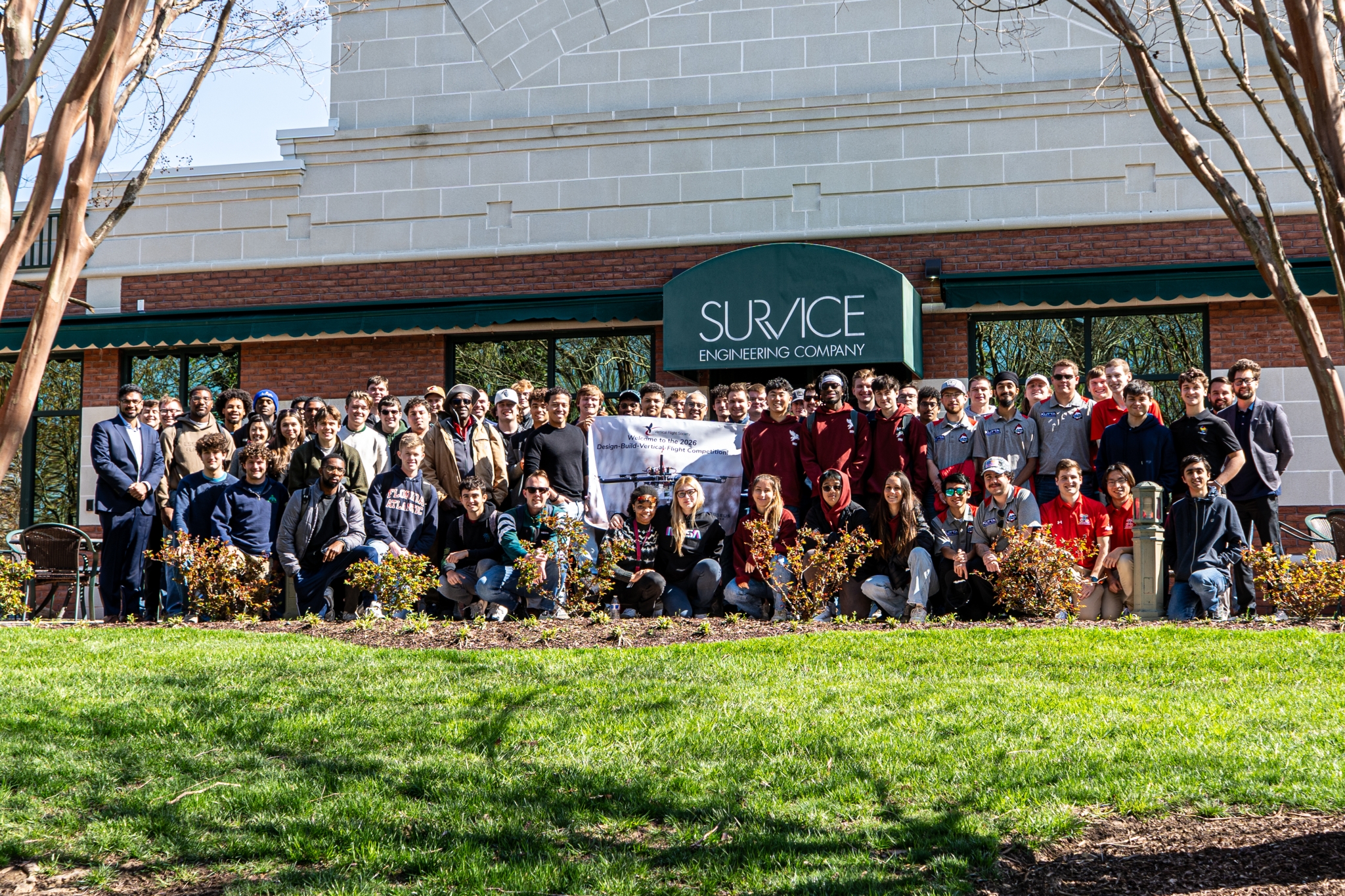
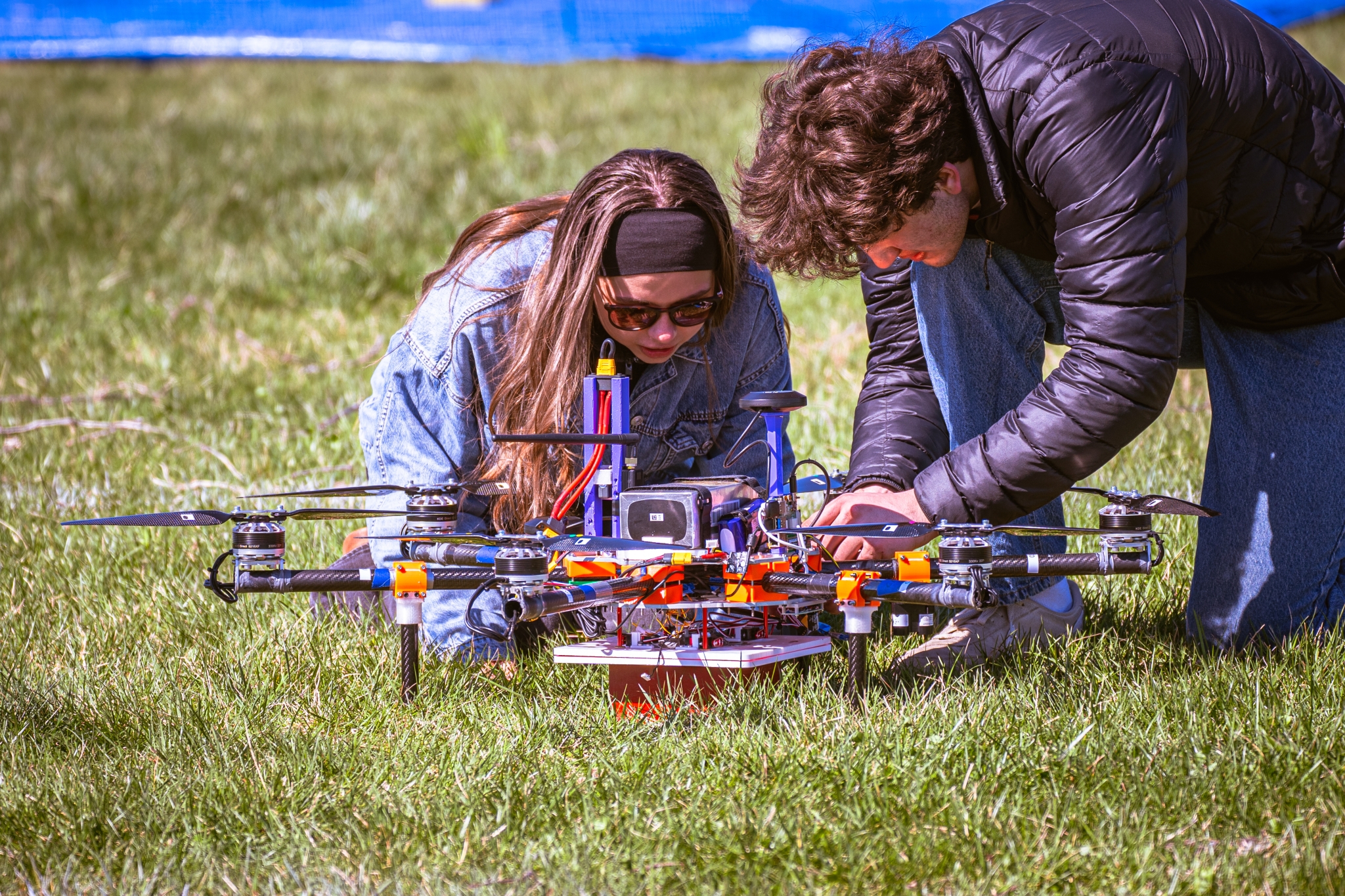
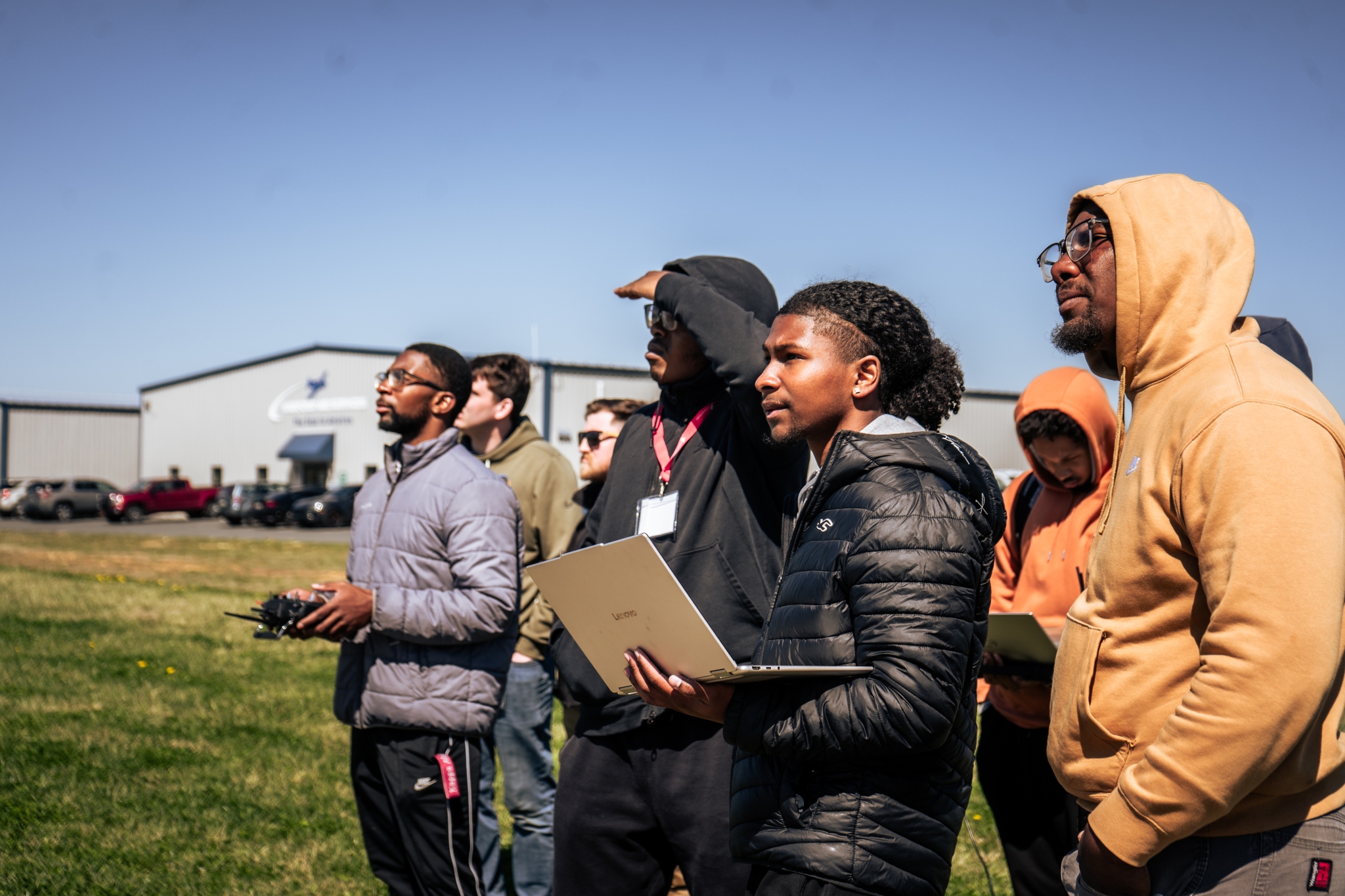
Fairfax, Virginia, USA, April 21, 2026 —The Vertical Flight Society’s sixth annual Design-Build-Vertical Flight (DBVF) Student Competition concluded with an outstanding display of innovation, resilience, and teamwork. Held at DBVF Host Sponsor SURVICE Engineering’s Applied Technology Operation facility from April 7 to 10, 2026, the DBVF Fly-Off marked the culmination of months of design, testing, and iteration as student teams from across the country brought their aircraft and ideas to life.
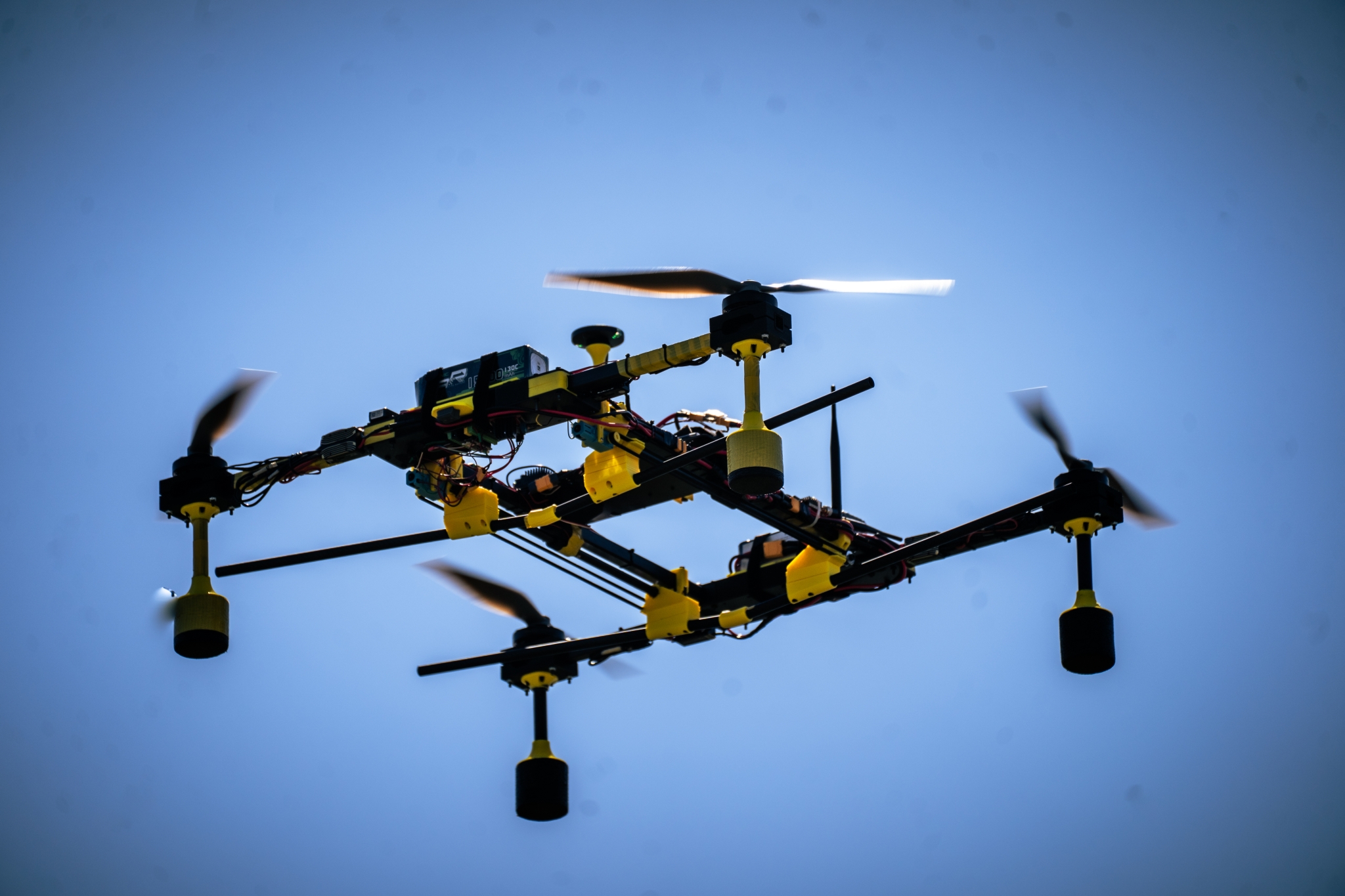
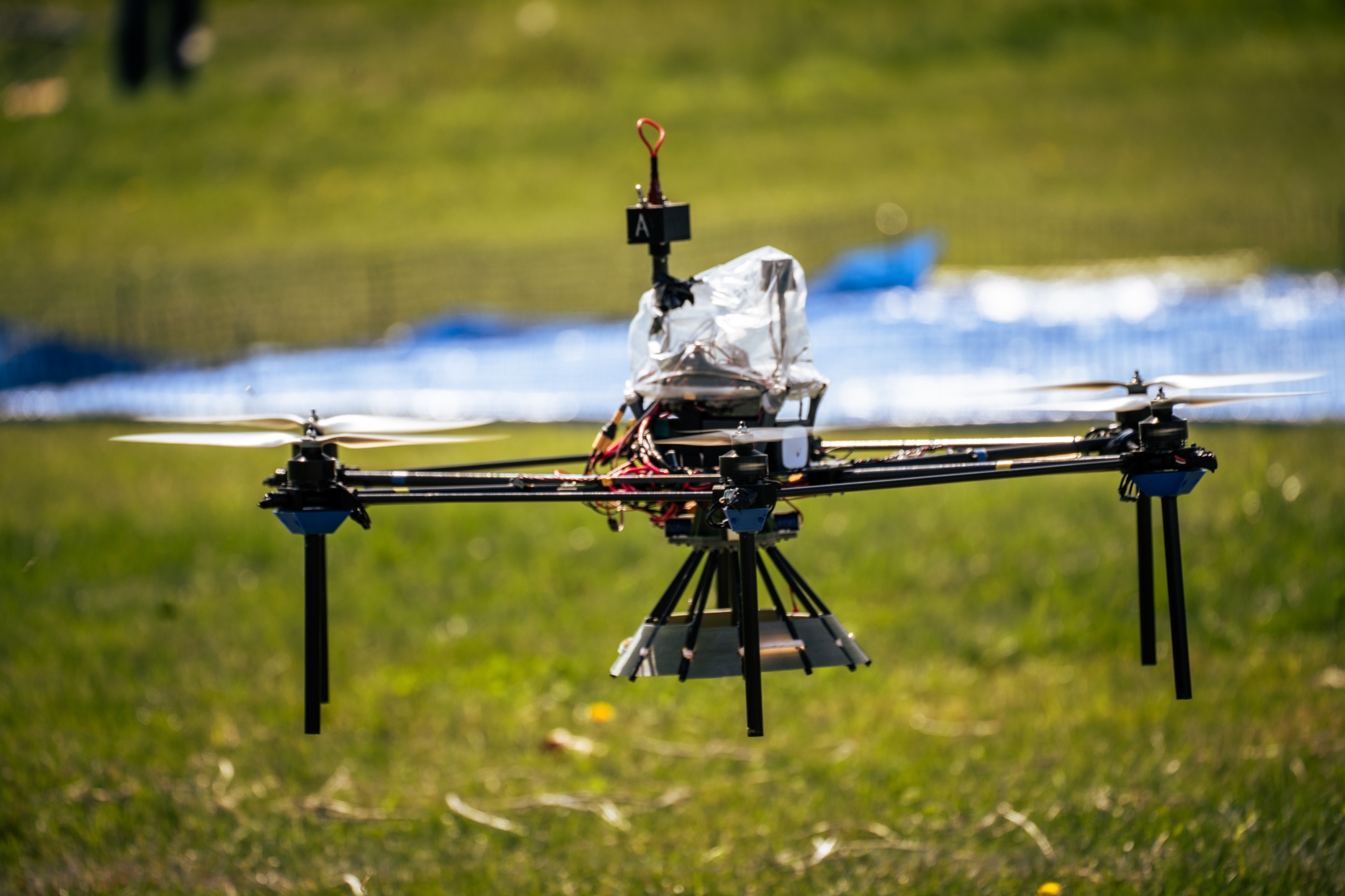
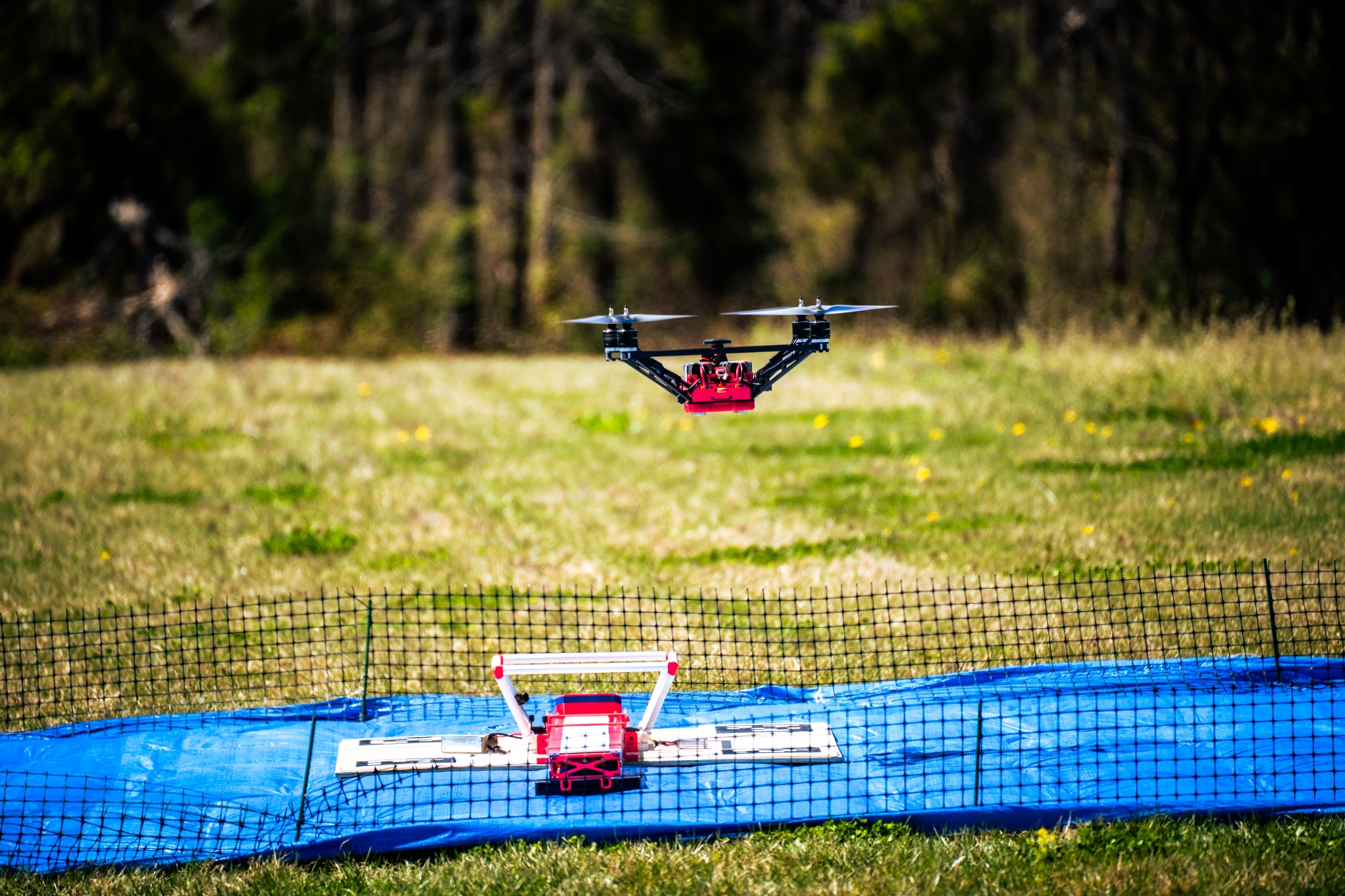
This year’s challenge tasked teams with designing and building an electric vertical takeoff and landing (eVTOL) aircraft system to support wildfire response operations. With increasing demand for advanced aerial systems in emergency scenarios, students were challenged to develop eVTOL aircraft capable of picking up and dropping simulated fire suppressants with precision and reliability.
Twenty letters of intent to compete were submitted at the beginning of the competition, a record for DBVF, and twelve teams advanced to this year’s Fly-Off.
Designing for Precision: Simulated Fire Suppressants
The 2025-2026 competition asked teams to imagine their eVTOL aircraft playing a key role in wildfire mitigation, focusing on flight precision and delivering simulated fire suppressants via sandbags to designated zones.
The competition consisted of three flight missions, which could only be unlocked in order:
• Flight Mission 1 (Scouting): Teams navigated a waypoint-based course to simulate aerial reconnaissance, testing maneuverability and situational awareness.
• Flight Mission 2 (Initial Payload Drop): Aircraft executed precise payload delivery operations, simulating the first response to the spread of the fire. Waypoints representing fire varied in size and placement, requiring accuracy under pressure.
• Flight Mission 3 (Re-Supply): The aircraft retrieved additional payload and returned to the mission area, simulating sustained firefighting operations. This mission introduced a new level of complexity, emphasizing system integration, efficiency, and repeatability.
Across all missions, teams could choose to operate manually or incorporate autonomous functionality, further highlighting the growing importance of advanced flight control systems in real-world applications and team communication. The focus on real-world application was a reminder to all teams that engineering impact happens when design meets purpose.
Results and Recognition
After many months of hard work, the following teams earned top honors:
| Place | University and Location | Team Name | Prize |
|---|---|---|---|
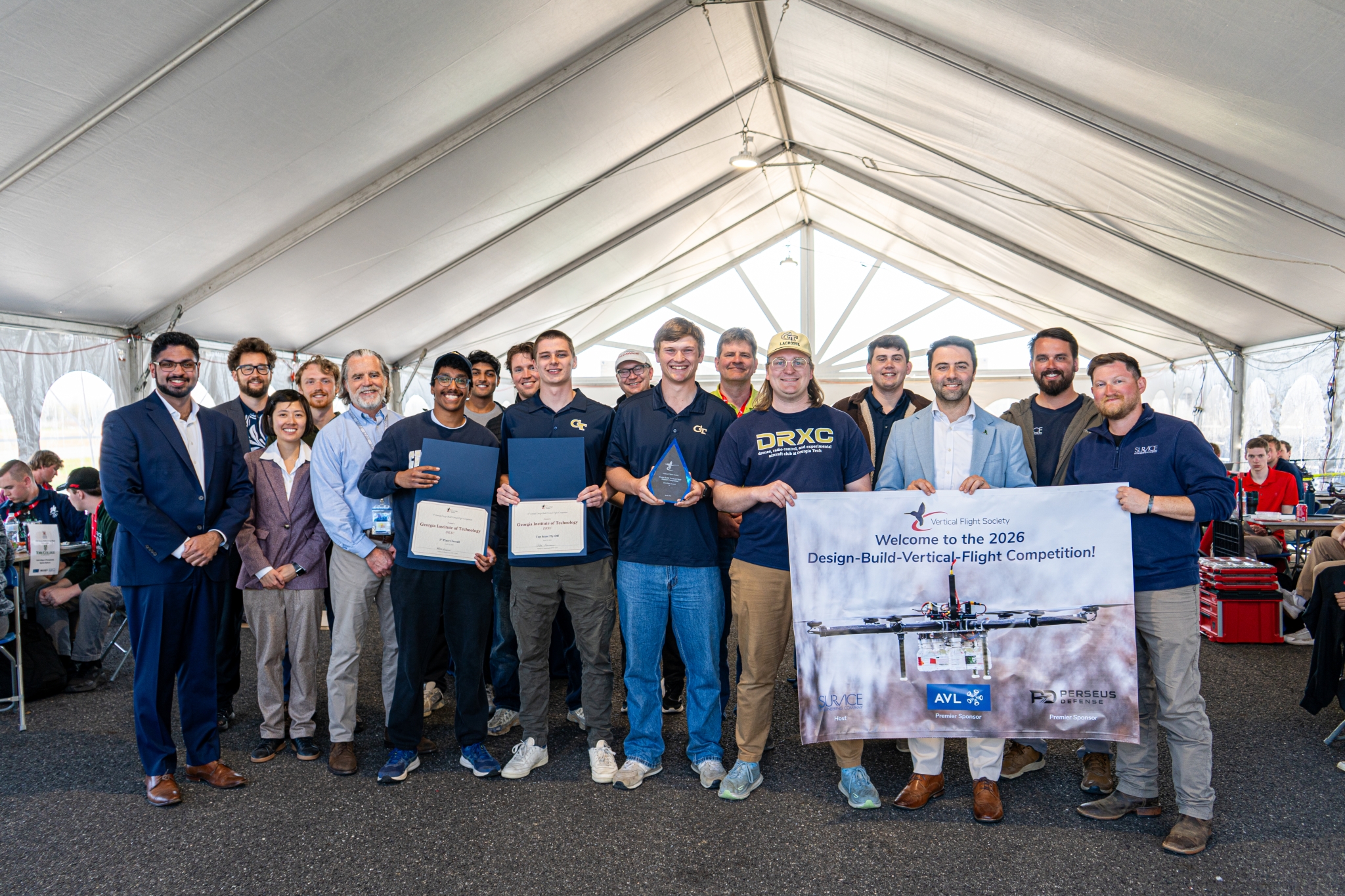
| 1st | Georgia Institute of Technology (Atlanta, Georgia, USA) |
DRXC | $2,200 |
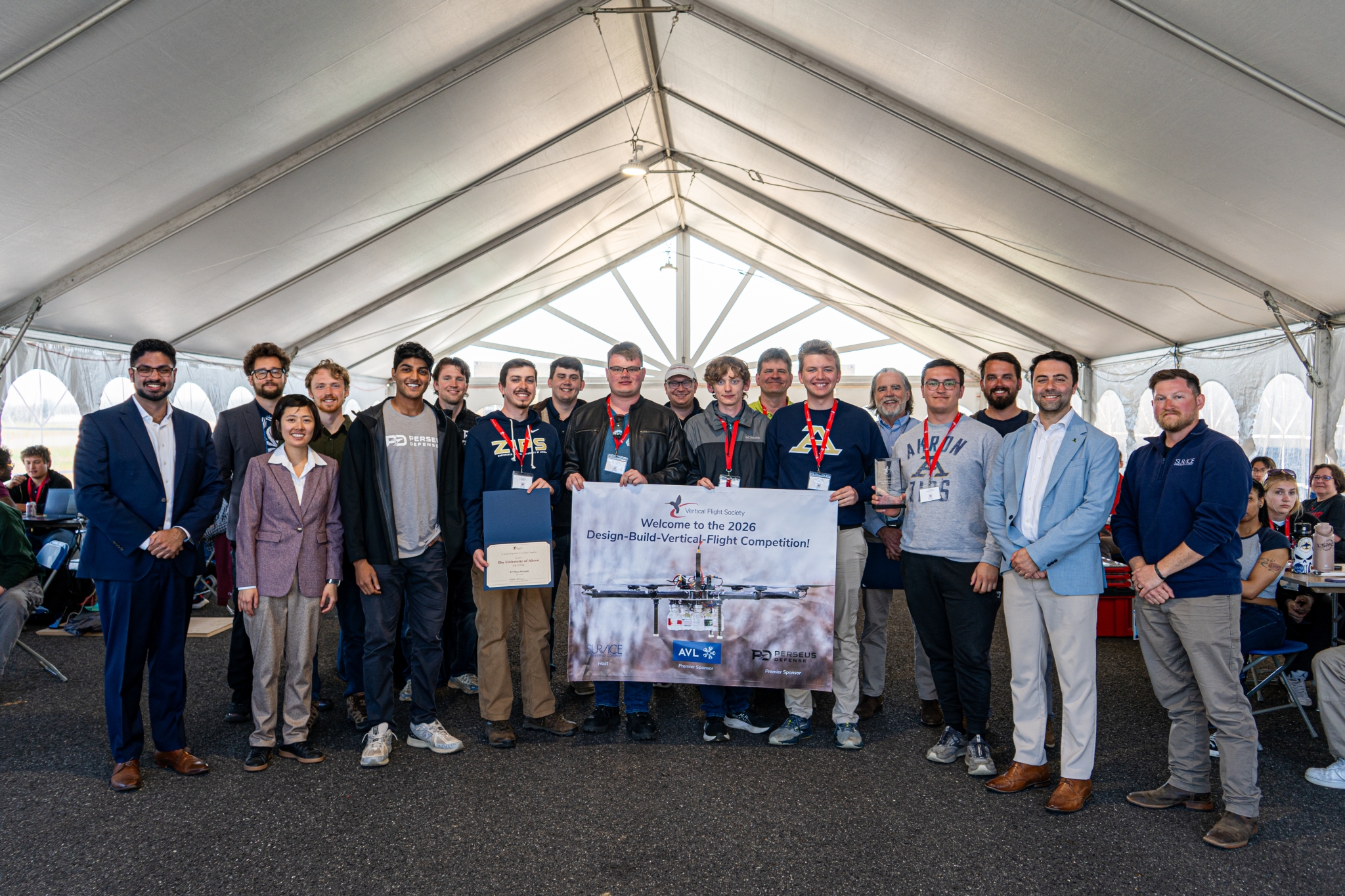
| 2nd | The University of Akron (Akron, Ohio, USA) |
UA VTOL | $1,300 |
| 3rd | University of Maryland (College Park, Maryland, USA) |
AMAV | $700 |
| Top Score Fly-off Performance | Georgia Institute of Technology (Atlanta, Georgia, USA) |
DRXC | $400 |
| Top Score Final Technical Report | Embry-Riddle Aeronautical University Prescott (Prescott, Arizona, USA) |
DOLPHIN | $400 |
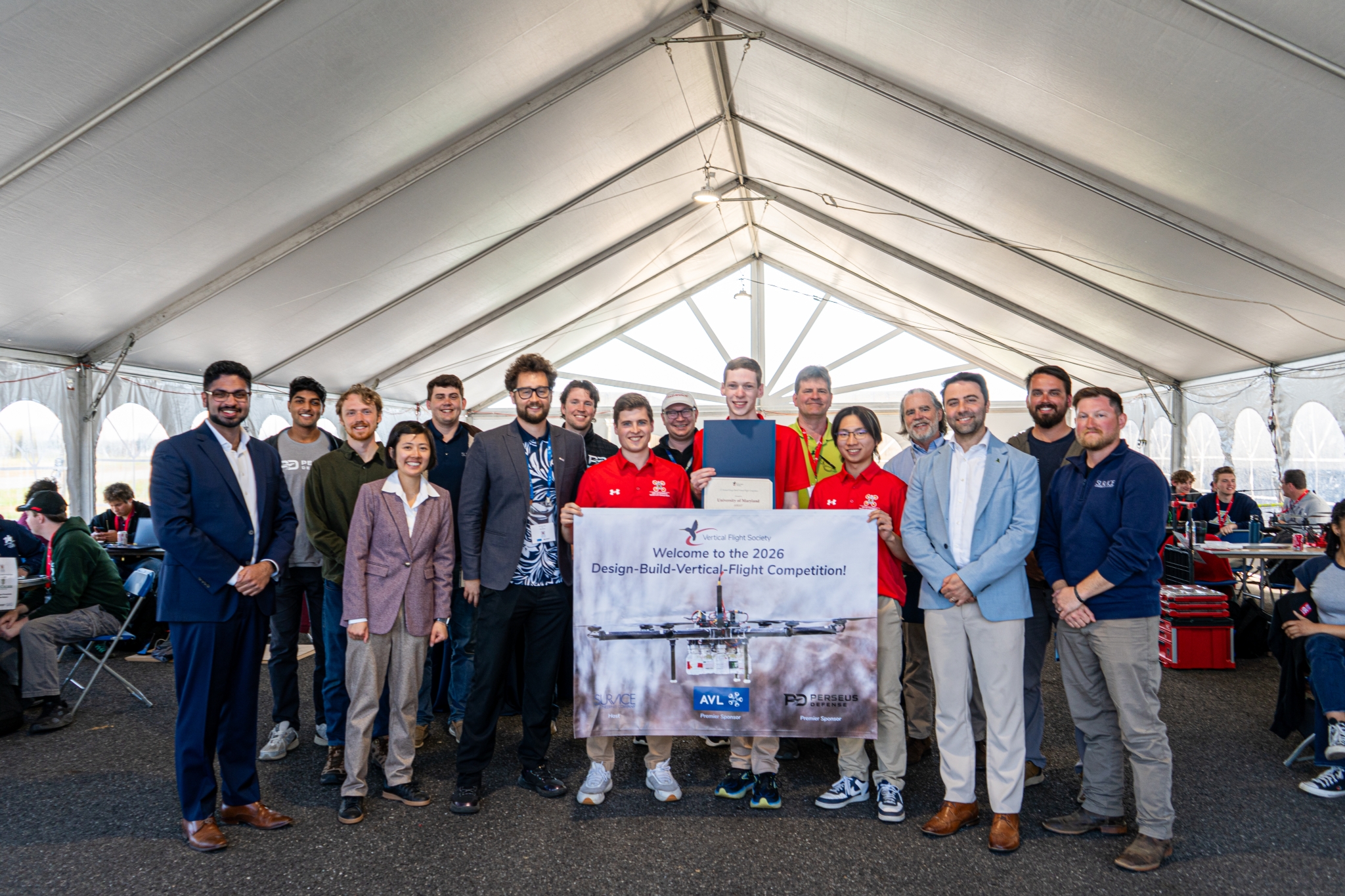
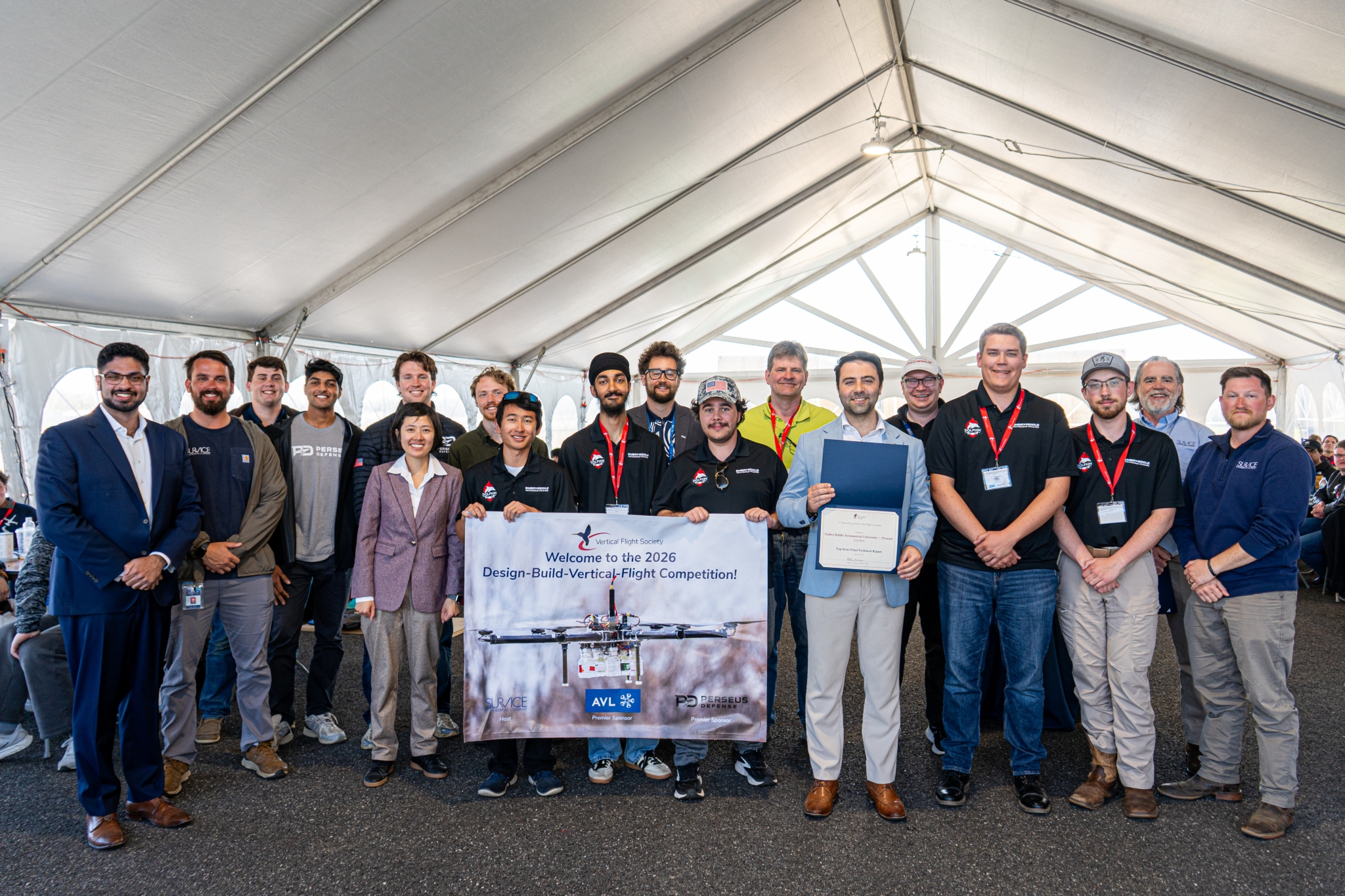
Recognition and Acknowledgement
DBVF’s focus on supporting the next generation of vertical flight innovators resonated deeply with the companies involved. Host Sponsor SURVICE Engineering designs defense eVTOL platforms for transport, resupply, and tactical missions. Premier Sponsor Perseus Defense focuses on advancing counter-UAS capabilities and next-generation defense systems. AVL brings deep expertise in simulation and performance optimization. ParaWave focuses on tactical and advanced computer vision systems. For everyone, this competition fosters important, real-world skillsets.
“I am incredibly grateful to all the judges, sponsors, and the entire SURVICE Engineering team whose dedication made this year’s competition possible,” said Adithya Ramaswami, Chair of the VFS DBVF Competition. “From the flight line to behind the scenes, their commitment and the drive of the student teams are what continue to elevate DBVF each year. As the competition evolves and continues to grow, the strength of this community remains its greatest asset, and we are excited for what lies ahead.”
The Vertical Flight Society extends its sincere thanks to this year’s Host Sponsor, SURVICE Engineering, for providing access to their FAA-authorized flight test facility and for their continued support of DBVF. Deep appreciation is also extended to DBVF’s Premier Sponsors, Perseus Defense and AVL, for their invaluable contributions. Additional gratitude is given to ParaWave’s co-founder and CTO, Jack Murray, for his incredible support throughout the competition, as well as to the many members of the VFS and UAS community whose dedication makes DBVF possible year after year.
About the Vertical Flight Society
The Vertical Flight Society is the world’s leading nonprofit technical society dedicated to advancing vertical flight. VFS brings together industry, government, and academia to foster innovation, share knowledge, and support the responsible development of vertical lift and advanced air mobility systems worldwide.
VFS is @VTOLsociety on social media: Facebook, Instagram, LinkedIn, Vimeo and YouTube.
The Vertical Flight Society
2700 Prosperity Ave, Suite 275, Fairfax, VA 22031 USA
+1-703-684-6777 | staff@vtol.org | www.vtol.org | www.eVTOL.news