


Information for Forum Authors
The Vertical Flight Society's Annual Forum & Technology Display is the premier opportunity to present and discuss advances in vertical flight technology, developments, and applications. The Forum brings together researchers, engineers, industry laders, government representatives, and academia to present and discuss the latest advancements in vertical flight research, development and regulations.
The Forum 83 Technical Chair is Mr. Marc Alexander, National Research Council Canada, and the Forum 83 Deputy Technical Chair is Dr. Mike Jones, Systems Technology Inc.
Author Information:
- Become a Forum author - download the Forum 83 Call for Papers..
- The Forum 83 abstract deadline has been extended to October 23, 2026.
- Download and use the Abstract Template (Word).
- Download the LaxTex Template.
- Submit abstracts to the Mira Forum 83 site: Mira Forum 83
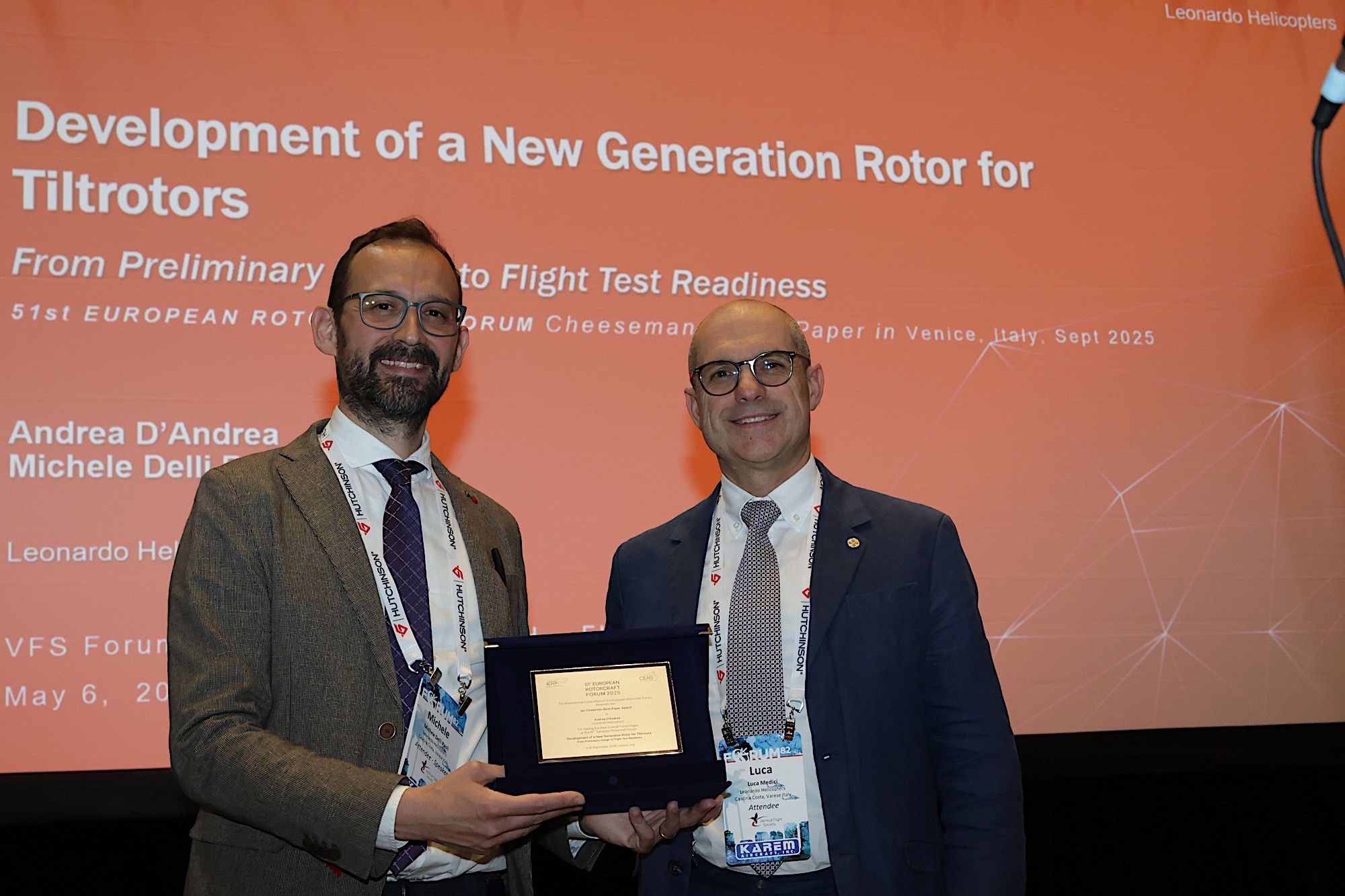
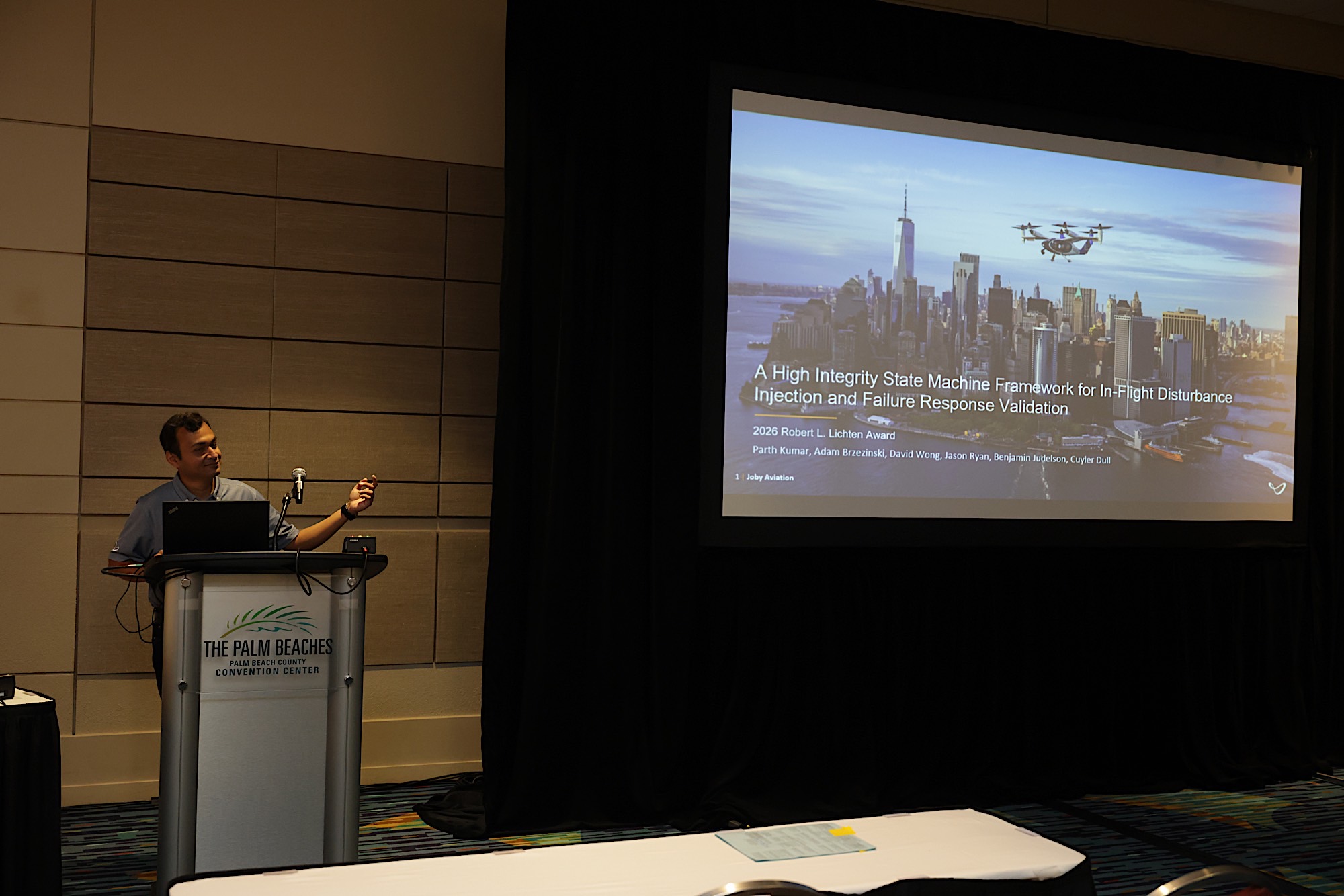
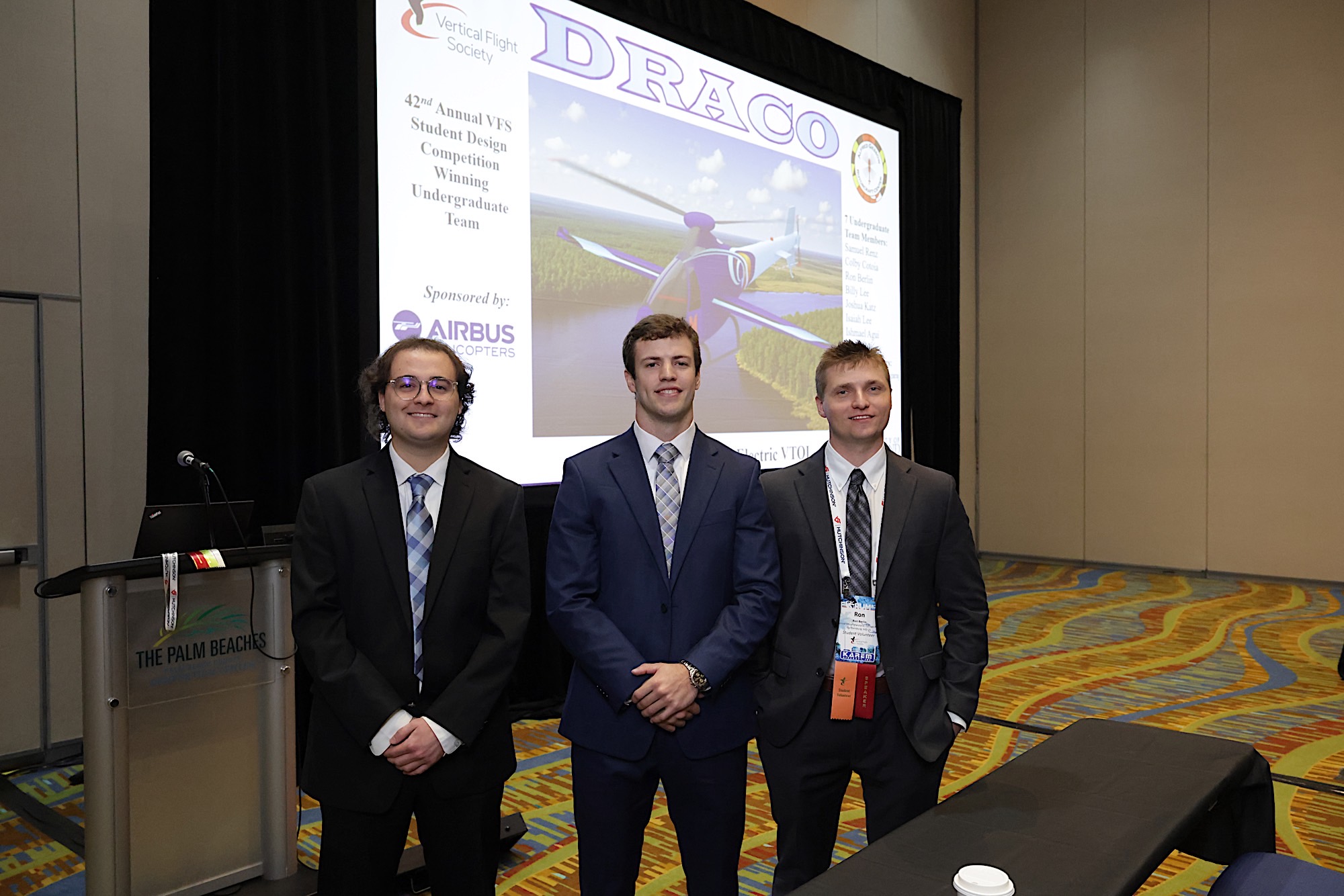
- Check out all the Forum 82 (2026) Best Papers - join the ranks of these presitigious authors by submitting an abstract for Forum 83 in Phoenix.
Author Forum Participation: VFS enforces the following policies.
- No Paper, No Podium: If a written paper is not submitted by the required deadline, the author(s) will not be permitted to present at the Forum.
- No Podium, No Paper: If a paper is not presented at the Forum, it will not be published in the Forum Proceedings.
- There is no virtual attendance or presentation option at the Forum.
- Author Publication Responsibility & VFS Artificial Intelligence (AI) Policy: Author expectations regarding technical publication in the age of AI remain the same. Authors are fully responsible for the accuracy, orginaility, validity, and integrity of all submitted work, regardless of whether AI tools were during content development. Refer to the Author Publication Responsibility & AI Policy for details.
Technical Committee Information: Download the Forum 83 Call for Papers for details.
Acoustics: Papers that address recent advances in the study of rotorcraft acoustics and their related fields. Research into crewed or uncrewed vehicles that focus on external and internal noise generation, propagation, control (active and passive), community impact for rotorcraft, VTOL and AAM, and similar topics in wind turbine noise.
Advanced Vertical Flight: Papers that focus on novel, innovative configurations, and transformational technologies for vertical flight vehicles. Research on applications of advanced technologies to enable transformational capabilities beyond that of current state-of-the-art and production VTOL aircraft.
Aerodynamics: Papers are invited that address recent accomplishments in all areas of rotorcraft and vertical and/or short takeoff and landing (V/STOL) aircraft aerodynamics, especially as related to the future of vertical flight. Topics such as computational fluid dynamics (CFD) techniques, flow visualization methods, design methods, unique modeling, and unsteady, high angle of attack or vortical flows, to name just a few.
Aircraft Design: Papers on the design of screwed or uncrewed VTOL aircraft, their major systems, and components. Topics such as the interaction of technology, configuration, and requirements in the design of next generation civil and military rotorcraft are sought.
Autonomy & Uncrewed Aircraft Systems (UAS): Papers are invited on the concepts, design, development, operation and robotics aspects of VTOL and rotary-wing UAS.
Avionics & Systems: Papers that address software, mission, flight, or avionics systems for crewed or uncrewed, or optionally crewed vertical flight aircraft.
Crash Safety: All aspects of crashworthiness and aviation occupant safety relating to rotorcraft, UAS, and other V/STOL aircraft in applications such as military, civil, offshore transport, AAM, mountainous terrain, emergency medical services and law enforcement. Of key interest are system integration analyses that demonstrate enhanced occupant safety. Emphasis will be given to the recent development of new crash safety concepts and technologies.
Crew Stations & Human Factors: Papers on all aspects of air vehicle crew stations and/or human factors engineering.
Dynamics: Papers from all areas related to rotorcraft dynamics and aeroelasticity. Priority will be given to completed programs where significant conclusions are substantiated and the results contribute to advancing the state-of-the-art.
Electric VTOL: Papers are invited on all areas related to the sciences, engineering, and technologies unique to electric vertical takeoff and landing aircraft (eVTOL) and urban air mobility (UAM) infrastructure of the future state of the art.
Handling Qualities: Papers that address all aspects of VTOL aircraft handling qualities, from basic research through engineering design and development to implementation, verification, qualification and certification in piloted simulation and flight tests. Handling Qualities comprise all of the aircraft characteristics that govern the ease and precision with which a pilot or uncrewed system is able to perform tasks required by various aircraft missions and under special operational or environmental conditions.
History: The History Committee invites scholarly papers and first-hand accounts that facilitate the preservation and understanding of the world’s vertical flight history. Of particular interest are papers documenting important but not well-known developments in vertical flight technologies or vehicles, rediscovery of forgotten pioneers, or events involved in understanding specific phenomena.
Integrated Vehicle Health Management (IVHM): Papers addressing IVHM and condition-based maintenance (CBM), as they support total lifecycle value (sustainment, operational availability, etc.) of crewed and uncrewed rotorcraft platforms.
Manufacturing Technology & Processing: The US Department of Defense FVL efforts, NATO's NGR, legay fleet modernization, and emerging eVTOL concepts all point to the growing need for advanced manufacturing and quality assurance solutions. Papers are sought on innovative manufacturing, inspection, and design assurance approaches that support affordability, productibility, and quality across these platforms.
Modeling and Simulation: Papers addressing the application of modeling and simulation to the future of vertical flight, VTOL aircraft flight training and rehearsal flight operations, design, safety, and certification requirements.
Operations & Infrastructure: Papers which encompass disciplines affecting current and future operations & operability of rotorcraft, eVTOL, VTOL, and UAS.
Product Support Systems Technology: Papers addressing the development or application of technology, processes and innovations that support vertical lift operators and maintainers, including eVTOL systems.
Propulsion: Papers that present new and innovative information on propulsion for rotorcraft and other vertical flight aircraft, including unique propulsion challenges of VTOL, V/STOL, eVTOL and uncrewed VTOL aicraft, including unique propulsion configurations, component developments, and new enabling technologies.
Safety: Papers addressing technologies and processes for the prevention of vertical flight accidents in the design, testing and operational stages.
Structures & Materials: Papers addressing the development, design, analysis, testing, service experiences or novel application of structures and materials to crewed and uncrewed rotorcraft, powered-lift and fixed‐wing V/STOL aircraft.
Systems Engineering Tools & Architecture: Papers addressing the system design and development, integration, and life cycle withing the engineering design process for crewed, uncrewed, or optionally crewed vertical flight aircraft.
Test & Evaluation: Papers addressing all aspects of legacy and future VTOL aircraft test and evaluation. This includes testing of advanced technologies (components and subsystems) and vehicles (crewed and uncrewed), both full- and model-scale, and in laboratory, wind tunnel, ground and flight-test scenarios.